Entrando a entoar, com uma pontinha de melancholia, a celebre balada--Dames du temps jadis, o poeta François Villon, em sua linguagem docemente archaica e ao de leve desbotada, interroga, n’um estribilho famoso:--Où sont les neiges d’antan?
Así empieza
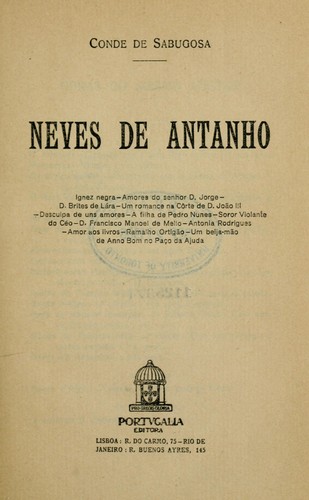
Ignez negra--Amores do senhor D. Jorge--D. Brites de Lára--Um romance na Côrte de D. João III--Desculpa de uns amores--A filha de Pedro Nunes--Soror Violante do Céo--D. Francisco Manoel de Mello--Antonia Rodrigues--Amor aos livros--Ramalho Ortigão--Um beija-mão de Anno Bom no Paço da Ajuda
[Illustração]
PORTVGALIA EDITORA
LISBOA: R. DO CARMO, 75 RIO DE JANEIRO: R. BUENOS AYRES, 145
OBRAS DO MESMO AUCTOR
O Minuete--Comedia em 1 acto. Não entrou no mercado.
… sigue leyendo gratis en el lector inmersivo de Mirrow.
Léelo gratis en Mirrow
Neves de antanho completo, con atmósfera de vídeo y sonido. Sin descargas.
Más historia gratis
- Storia della Repubblica di Firenze v. 3/3
Gino Capponi - Alcibiade : $b scene Greche in dieci quadri
Felice Cavallotti - Mystic London; or, Phases of occult life in the metropolis
Charles Maurice Davies - Roma nella memoria e nelle immaginazioni del Medio Evo vol. I
Arturo Graf - Os deputados brasileiros nas Côrtes Geraes de 1821
Manuel Emílio Gomes de Carvalho - Ons Vaderland van de vroegste tijden tot de 15de eeuw
M. Lievevrouw-Coopman